Want to read with me? Follow this link to view the list and pick a book (or a few!) to read along with me. I'd love for this project to be collaborative, and will post anyone's thoughts beside my own.

Sunday, December 2, 2018

They were strangers who had met in a chance encounter. They had known each other before Life began.

The God of Small Things by Arundhati Roy

Spoiler Alert: Plot Summary
The God of Small Things is a tale of twins. We follow Estha (Esthappen) and Rahel through their present, past, and future, in India and abroad, delving into tragedy and reliving their childhood. They are, in many ways, more a we than a he and a she. They seem to know each other's innermost thoughts and feel each other's pain. The story weaves us back and forth from past to present, and we learn the circumstances that split Estha and Rahel apart, the eventual death of their mother, and how the twins are eventually reunited.

The rest of the family plays an integral role in the plot, from the twins' great-aunt Baby Kochamma, to their grandparents Mammachi and Pappachi, to their uncle Chacko and cousin Sophie Mol. The story is full of death and full of life, packed with flavor and aching with pain and desire. Ultimately, what the twins find and seek is not so much resolution as reincarnation.
Spoiler Over: Continue Here

People whose names begin with the letter D
Dear readers, I wanted to like this book. In fact, I wanted to LOVE this book, since two of my dearest friends (both with names that start with D) are big fans. Alas, I did not love this book. I won't go so far as to say that I hated it, but I will say that it wasn't a very pleasurable reading experience to me. In much the same way that Great Expectations is full of sadness, this book is full of trials and challenges for its characters. But, where GE succeeds for me is that it gives the reader levity and joy within that desolation. This is not to say that only happy books are good ones - that, certainly, is not true. But in this case, I wanted not only a little more joy, but also to genuinely care about what happened to the characters. Perhaps because it took place mostly in retrospectives, I didn't feel that I really got to know the characters, so when things happened to them, I didn't really care very much. In any case, I always encourage readers to make their own decisions about books, and of a trio of readers, this book still has a 67% recommendation rating, thanks to D2. So make up your own mind. 

Capital letters When the Mood seems to Strike
One of the things I really liked about this book was that it reminded me very much of the lyrical quality to several other books I've read by Indian authors (Home and the World, Haroun and the Sea of Stories). Obviously I don't want to lump all authors of a country together, but I do find that there are some similarities and kinships I really enjoy. One of these is a propensity to use capital letters in meaningful ways. Here is an example: 
In those early amorphous years when memory had only just begun, when life was full of Beginnings and no Ends, and Everything was Forever, Esthappen and Rahel thought of themselves together as Me, and separately, individually, as We or Us.
Church domes painted blue like the sky.
During a funeral, Rahel examines the church ceiling, and it is domed and painted like the sky, which reminded me very much of the church I grew up going to. I used to count the stars in the ceiling and imagine the sky beyond that sky, so I liked the idea of us having similar mental explorations continents apart. 

Now tell me, are you jelly, or are you jam? 
Another thing I really liked about this book was that the family owns a factory called 'Paradise Pickles and Preserves'. As I've mentioned in other posts (Please Look After Mom) the process of preserving and pickling makes me think fondly of my mom and my aunts and my great aunts. I loved this line in particular, as my mother and I have discussed the difference between jelly and jam at length: 
They used to make pickles, squashes, jams, curry powders, and canned pineapples. And banana jam (illegally) after the FPO (Food Products Organization) banned it because according to their specifications it was neither jam nor jelly. Too thin for jelly and too thick for jam. An ambiguous, unclassifiable consistency, they said.
Pappachi
Pappachi reminded me in a very negative way of Things Fall Apart and some other classic wife-beaters in literature. That said, here are a few lines about him that I enjoyed:
In the evenings, when he knew visitors were expected, he would sit on the verandah and sew buttons that weren't missing onto his shirts, to create the impression that Mammachi neglected him. haghaghaghahgagh.
His light-brown eyes were polite yet maleficent, as though he was making an effort to be civil to the photographer while plotting to murder his wife. This sentence is so great. 
Feeling vomity
I loved this exchange between Estha and Ammu, his mother, at the movies: 
"Now WHAT?"
"Feeling vomity," Estha said.
"Just feeling or d'you want to?"
"Don't know."
It reminded me of many a conversation I have had with a middle schooler who was feeling vomity, and/or who might have already felt vomity and, say, thrown up in the bathroom sink. 

Books this book reminded me of:
  • Please Look After Mom (house as factory, pickling, preserving)
  • The Home and the World (zamindars, revolution, relationship between castes)
  • Haroun and the Sea of Stories (Capital Letters but also lyrical storytelling)
  • Hotel New Hampshire (incest, siblings intertwined)
  • Things Fall Apart (treatment of wife beating as banal)
  • Ulysses (made me feel vomity, tbqh)
  • The House of Spirits (muteness becoming its own character)
Striking Sentences
  • The old house on the hill wore its steep, gabled roof pulled over its ears like a low hat.
  • A hot river and a pickle factory. 
  • This was the trouble with families. Like invidious doctors, they knew just where it hurt.
New words
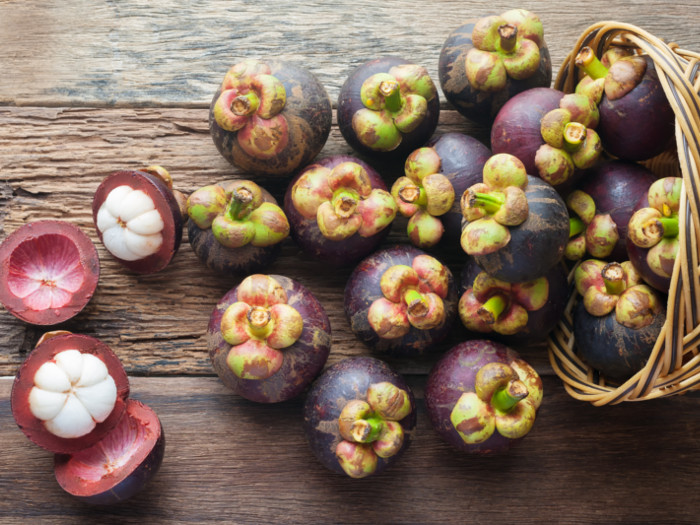
Image result for mangosteendhobi - a caste group of India whose traditional occupation was washing clothes

veshya - a Hindu of an upper caste traditionally assigned to commercial and agricultural occupations

estivation - ZOOLOGY: prolonged torpor or dormancy of an animal during a hot or dry period; BOTANY: the arrangement of petals and sepals in a flower bud before it opens

mangosteen - The purple mangosteen, known simply as mangosteen, is a tropical evergreen tree believed to have originated in the Sunda Islands of the Malay archipelago and the Moluccas of Indonesia

mundu - in Kerala and other parts of southern India: a large piece of cloth worn wrapped around the waist and (when worn by men) frequently having the lower back edge pulled up between the legs and tucked into the waistband
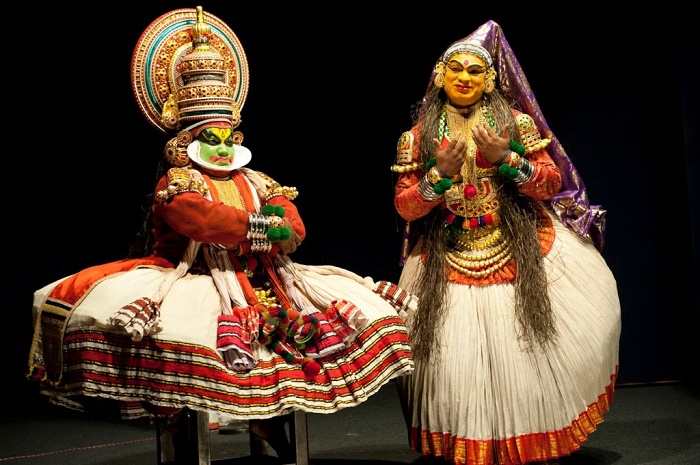
Image result for kathakali
lambent - (of light or fire) glowing, gleaming, or flickering with a soft radiance

kathakali - Kathakali (Malayalam: കഥകളി) is one of the major forms of classical Indian dance. It is a "story play" genre of art, but one distinguished by the elaborately colorful make-up, costumes and facemasks that the traditionally male actor-dancers wear.

I will leave you with this line, which was a reference to the kathakali, but I think speaks quite clearly to a broader truth: 
The Great Stories are the ones you have heard and want to hear again. The ones you can enter anywhere and inhabit comfortably. They don't deceive you with thrills and trick endings. They don't surprise you with the unforeseen. They are familiar as the house you live in. Or the smell of your lover's skin. You know how they end, yet you listen as though you don't. In the way that although you know that one day you will die, you live as though you won't. In the Great Stories you know who lives, who dies, who finds love, who doesn't. And yet you want to know again.
I'm off in search of more Great Stories, and to explore the beauty of southern California! Onwards to Maya Angelou. 

Thursday, November 1, 2018

I used to be in a very revolutionary mood, but now I think that we'll gain nothing by violence.

Doctor Zhivago by Boris Pasternak

Spoiler Alert: Plot Summary

Cast of Characters (not all-inclusive) Zhivago, aka Yuri, aka Doctor Zhivago
Lara, aka Antipova (married name) (Zhivago's love, and one-time baby mama)
Antonina Alexandrovna Gromeko, aka Tonya (Zhivago's wife, and two-time baby mama)
Antipov, aka Strelnikov, aka Pasha (Lara's husband)
Viktor Ippolitovich Komarovsky (Lara's first lover/tormentor)
Evgraf Zhivago (half brother to Zhivago)
Can't remember her name (#sorrynotsorry) (Zhivago's second wife, and two-time baby mama)

Oh, I'm sorry, are you confused? I didn't even include the alternate diminutives, so really, I'm cutting you some slack here. 

In all seriousness, though, here's the gist of it: 

This is the story of Zhivago - the man, the myth, the legend. We begin with him in his boyhood, and we end shortly after his death. The interim is replete with the stuff of his life - love, loss, adventure, work, revolution (because come on, he's a Russian, so obvi), family, writing, and some more love. We travel with him across the great expanse of Mother Russia, we fall hard with him for the forbidden Lara, and we feel for him when he is caught within the various webs of war and revolution in his home country. This book is an epic in the very best sense, and like any good epic, it's a wild ride.

Spoiler Over: Continue Here

Oh, I'm sorry, were you wanting more plot just then? I don't feel inclined to acquiesce to your request. You'll simply have to pick up a copy (or borrow mine) and read it yourself if you'd like to know more of the details. 

So, what did I think of this book, you DEMAND TO KNOW? I loved it. It officially goes into a very specific category for me called "Books where I don't really like any of the characters but somehow the book is one of my all-time favorites anyway". There is one other book in it. Any guesses? Starts with "Gr" and ends in "pectations."

It's not that I found Dr. Z unlikable, but more that he felt kind of entitled and aimless toward the end. He also had a lot of children, and didn't seem super invested in figuring out how they would do that whole growing up thing, which I just can't condone. But there's something sweeping and grand and majestic about this book that's sort of impossible to capture, and that's what I loved about it. I have alphabetized and categorized my thoughts for your reading pleasure. 

Cortèges and Cholera
This book has a stellar opening scene. We begin with Dr. Zhivago's mother's funeral, and we're quite literally standing over her grave in the middle of snowstorm. It's totally epic and amazing. It also reminded me of the opening of Love in the Time of Cholera for some reason, something about funerals and somber carriages and such. 

Fragrances and Flashbacks
Often, authors write of smells that make me yearn to eat the food in the book, or experience a specific moment in space and time. But Pasternak had a real knack for writing about smells, and weather, and things dealing with the physical world. Here are a few of my favorite fragrance flashbacks (anyone else thinking about Proust and his madeleines?):
  • Here she stopped and, closing her eyes, breathed in the intricately fragrant air of the vast space around her. It was dearer to her than a father and a mother, better than a lover, and wiser than a book. Lara, on returning home. I know it's odd, but this is what the smell of manure and hay does for me.
  • The handkerchief had the mingled smell of mandarine and of Tonya's hot palm, equally enchanting. The childishly naïve smell was intimately reasonable, like a word whispered in the dark. Aren't these metaphors spectacular? 
  • Then, like a telegram received on the way, or like greetings from Meliuzeevo, a fragrance floated through the window, familiar, as if addressed to Yuri Andreevich... Everywhere there were blossoming lindens. The ubiquitous wafting of this smell seemed to precede the northbound train, like a rumor spread to all junctions, watch houses and little stations, which the travelers found everywhere, already established and confirmed.
  • The air smells of pancakes and vodka, as during the week before Lent, when nature herself seems to rhyme with the calendar. I love everything about this sentence. 
(Sometimes) Lugubrious Lara
I don't want to go into too much detail about Lara here (because I'd really prefer that you go read the book) but here are a few lines I liked about her: 
  • Lara liked to talk in semidarkness with candles burning.
  • I'm broken, I have a crack in me for all my life.
Love and Lovers
Since this is a Russian novel, there's no shortage of love in it. Okay, so maybe that's not true of all Russians, but it's true for several of the Russians I have read for this blob. 
  • I don't think I'd love you so deeply if you had nothing to complain of and nothing to regret.
  • I love you wildly, insanely, infinitely. 
I am not sure I want to be loved insanely. Infinitely sounds nice, and wildly sounds exciting, but insanely gets into some tricky territory, imho. 

Playing Pianos
In the corner a tuner produced the same note a hundred times and then spilled out the beads of an arpeggio.
I loved this line because it made me think of our piano in the living room, and Mr. Donley (sp?) ping-ping-pinging at it to get the strings just right. 

Philosophy and Pepper (not be confused with that famous pairing of Salt and Pepper)
  • I think philosophy should be used sparingly as a seasoning for art and life. To be occupied with it alone is the same as eating horseradish by itself.
There is no shortage of philosophy in this novel (because, again, Russian) but this was by far my favorite line, from Lara, to Zhivago. 

Reading Russians

Reading this book reminded me of several fantastic Russian works, and I was ticking off a mental list of their common themes. Here's what I came up with: 
  • Philosophy
  • Existentialism/Death
  • Trains
  • Love affairs
  • Strange coincidences
  • Revolution
I thought of Bulgakov and Tolstoy, Solzhenitsyn and Dostoevsky, and then, a thought came to me which clearly should have struck me before. What OTHER book that I love has all of these components? Did you guess Atlas Shrugged? And what did I recently learn about Ayn Rand. Was it that her real name was Alisa Zinov'yevna Rosenbaum. (slaps self on forehead) Of COURSE SHE'S RUSSIAN. Now it all makes sense. 

Okay, now that I've shared that epiphany (epiffy-wot?), here are a few things that felt quintessentially Russian: 
  • Now, as never before, it was clear to him that art is always, ceaselessly, occupied with two things. It constantly reflects on death and thereby constantly creates life.
  • The fear known as spymania had reduced all speech to a single, formal, predictable pattern. The display of good intentions in discourse was not conducive to conversation. Passenger and driver went the greater part of the way in silence.
  • The war was an artificial interruption of life, as if existence could be postponed for a time (how absurd!). Note - that is the author's commentary, not mine. Though I quite agree. 
It is perhaps also worth noting that one of my favorite scenes in the book took place when Zhivago and Lara crossed paths in the local library. Get it? Reading Russians? ;)

Trains and Trajectories
Trains came up many times in this book, and I was totally here for it. I love trains, and train travel, and there's something that feels deeply romantic and also functional to me about train travel. Like you get to do two things at once but you can also be a normal person on a train, whereas on a bus or a boat or a plane you're more rumpled by the action of the vehicle or the air or the water.

This could just as easily have lived in the fragrance section, but since it was the train station they were describing, I decided to include it here.
It smelled of early city winter, trampled maple leaves, melting snow, engine fumes, and warm rye bread, which was baked in the basement of the station buffet and had just been taken out of the oven.
Unfreedom
Despite the absence of fetters, chains, and guards, the doctor was forced to submit to his unfreedom, which looked imaginary.
Doesn't that line just blow your mind a little? Just a little? Or maybe a lot? So good. 

Whispers and Waiting
I loved this exchange: 
He tugged at Yura's sleeve, trying to tell him something. 'Aren't you ashamed to whisper in a stranger's house? What will people think of you?' Yura stopped him and refused to listen.
Because it reminded me of this moment from Proust: 
-- "Now, don't start whispering! How would you like to come into a house and find everyone
muttering to themselves?" -- YBN's great-aunt, on why whispering is impolite

Words of Weather
Several people asked me about my experience reading this book, and what I told them each was this: I would, without a doubt, like to live in a world that was entirely composed of Pasternak's weather. He has many great qualities as a writer (in my opinion) but I fell in love again and again with the way he described the physical world and its weather. Here are some highlights for your pleasure. 
Even the sun, which also seemed like a local accessory, shone upon the scene by the rails with an evening shyness, approaching as if timorously, as a cow from the herd grazing nearby would if it it were to come to the railway and start looking at the people.
The cow either tossed her head angrily or stretched her neck and mooed rendingly and pitifully, while beyond the black sheds of Meliuzeevo the stars twinkled, and from them to the cow stretched threads of invisible compassion, as if they were the cattle yards of other worlds, where she was pitied.
The moonlit night was astounding, like mercy or the gift of clairvoyance.
Suddenly out of the cloud a heavy mushroom rain poured down obliquely, sparkling in the sun. It fell in hasty drops at the same tempo as the speeding train clacked its wheels and rattled its bolts, as if trying to catch up with it or afraid of lagging behind.
Yuri
Here is my favorite line about Yuri, aka Dr. Zhivago:
  • And to the muttering of the wind, Yuri Andreevich slept, woke up, and fell asleep in a quick succession of happiness and suffering, impetuous and alarming, like this changing weather, like this unstable night.
Lines I Liked
  • The weather was trying to get better. lol. love this. 
  • They went outside and did not recognize the air, as after a long illness.
  • This was what life was, this was what experience was, this was what the seekers of adventure were after, this was what art had in view - coming to your dear ones, returning to yourself, the renewing of existence.
Lines that were in contention for the title of this blog: 
I may arrive any day now like a bolt from the blue.
Everything around fermented, grew, and rose on the magic yeast of being.
But everything truly great is without beginning, like the universe. It does not emerge, but is suddenly there, as if it always existed or fell from the sky.
So you've heard that there's nothing good coming, only difficulties, dangers, uncertainty?
Words Which Were New to Me
heliotrope a plant of the borage family, cultivated for its fragrant purple or blue flowers, which are used in perfume; a light purple color, similar to that typical of heliotrope flowers

nicotania - an ornamental plant related to tobacco, with tubular flowers that are particularly fragrant at night

taiga the sometimes swampy coniferous forest of high northern latitudes, especially that between the tundra and steppes of Siberia and North America

virago - a domineering, violent, or bad-tempered woman 

Congratulations, dear ones, we've made it to the end of this blob. I'll leave you with thoughts that seem to encapsulate this novel, which serves, in a way, as a love letter to Lara and to Mother Russia. 
And this expanse is Russia, his incomparable one, renowned far and wide, famous mother, martyr, stubborn, muddle-headed, whimsical, adored, with her eternally majestic and disastrous escapades, which can never be foreseen!
It's not for nothing that you stand at the end of my life, my secret, my forbidden angel, under a sky of wars and rebellions, just as you once rose up under the peaceful sky of childhood at its beginning.
With that, I'll leave you. I'm reading many books for a personal book bingo (and read 24 for a previous book bingo) which is why my blobs have been less frequent. I could apologize, but that would imply that I'm sorry I'm reading so much. Which I'm not. So look for me some time, perhaps soon, perhaps not! Off to The God of Small Things! Join me if you dare!

Thursday, September 13, 2018

How brave do you need to be to satisfy yourself?

March by Geraldine Brooks

Spoiler Alert: Plot Summary
March is an extrapolation of the life of Mr. March, as in the Marches of Little Women. We follow Mr. March through the past and the present, and experience not only what he discloses to Marmee and his girls, but also the things he keeps close to the breast. He serves as a chaplain in the Civil War for the Union side, he peddles his way through the southern states as a young man, and he triumphs and tumbles as he precariously navigates his space as a white man, an educator, a father, and a man of god. He does us and the March family proud more often than once, and like any human being, he makes his fair share of missteps. Injury and tragedy conspire to send him to Washington, D.C. to a military "hospital", where he is joined by Marmee. His conscience ebbs and flows, shifts and grows, and in the end, though he returns with a heavy heart, he is reunited with the Little Women
Spoiler Over: Continue Here

This book was pretty spectacular. I wasn't really sure what to expect, since I had forgotten adding it to my list, and I've never read anything else by Geraldine Brooks. If you're an Alcott fan, I highly suggest that you read this. Don't expect the same tone as Little Women, per se, but Brooks does a stunning job of weaving her story into the ends and outskirts of Little Women. I think both books end up the better for it on the other side. On a very basic note, Little Women is a story about white women in New England, and in many ways, it seems to exist out of time in a way. They have their ups and downs, but there's a kind of beautiful comfort that seeps through the pages. This book is grittier, and packed with nuance. Emotion and connection and history are present in a more substantial capacity. This book seems to round out not just the fictional side of the March family, but the historical moment in which they lived. 

Here are the rest of my thoughts about it, in no real order.
Why have I never heard of this book before?
It won the Pulitzer Prize. Had you heard of this book before? I feel like the subtitle for my second list of 100 books should be "Books You SHOULD Have Heard Of Before, But Probably Didn't". This certainly makes my top ten favorites now, and I didn't even remember adding it to my reading list. 

On writing as a man
I'm always intrigued when an author chooses a protagonist who is of the opposite sex, and ultimately, I am not always pleased by the choice. I'm especially curious (perhaps suspicious?) when women write as a man - I suppose I always wonder if there's a patriarchal reason driving it. Why can't she be the protagonist? Is she not worthy of heroism herself? 

In this case, however, I was pleasantly surprised. Ms. Brooks did such a wonderful job of writing as a man that I was actually disappointed when she briefly switched over to Marmee's point of view. I thought, oh no! Where has Mr. March gone!? In my humble opinion, this is a sign of a job well done in writing across difference.

Why I have always wanted to be a March
Perhaps you, too, read Little Women and wanted to be a member of that family, dear reader. This book built on those feelings and made proud to want to be a March. Allow me to explain. 

The girls are close, which always resonated with me, having two sisters I am close with myself. But beyond that, they are kind. They are compassionate to their community and fierce protectors of their own family, and these things drew me to them originally. 

These lines imbued my long-burning desires to be a March with a kind of fierce pride:
  • Some call them less than human; I call her more than saintly - a model, indeed, for our own little women. Mr. March, on Grace, a slave he encounters first in his peddling days, and then again in the war. 
  • But would it have been better so? I am not convinced of it. For instead of idleness, vanity, or an intellect formed by the spoon-feeding of others, my girls have acquired energy, industry, and independence. In times as hard as these are now become, I cannot think this an unfortunate barter. That's right, Mr. March! Energy, industry, and independence!
  • We don't give up our girls for a dozen fortunes, Aunt. Rich or poor, we will keep this family together and find a happiness in true affection that some will never know, because all the wealth in the world cannot buy it. True affection can't be bought! 
  • On the March family's role in the Underground Railroad (based, as Brooks states, on the Alcott family themselves): We had all learned long ago not to interrogate our railroad travelers, for reasons pragmatic as well as kind. The people who came to us were often in a sort of trance, brought on by fear, exhaustion, and, I imagined, a kind of mourning for what they had left behind - family, perhaps; friends, likely, and the certainty of all that had ever been familiar. A home in bondage is a home, still, and it is no light matter to leave such a place, knowing that one's act is irrevocable. I can't share them all here, but the flashbacks to the March family and their role in helping slaves are very powerful.
On going south to Oak Landing
Mr. March begins the war embedded with troops, but as the conflict continues, he is sent south to a plantation that has been turned into a kind of 'experiment'. The previous owners lease the farm and slaves to the government, and the slaves become paid laborers on the land. It turns out to be dramatically different than what Mr. March's northern sensibilities had prepared him for, but I thought Brooks did a brilliant job of conveying the many nuances that complicated the circumstances for many different parties involved. Here is Mr. March's description of the weather, which felt very à propos given the unbearable heat we had the last few weeks here in Philadelphia:

Spring here is not spring as we know it: the cool, wet promise of snowmelt and frozen ground yielding into mud. Here, a sudden heat falls out of the sky one day, and one breathes and moves as if deposited inside a kettle of soup. In response, vegetation shoots out of the ground with irresistible force. Just when the body wishes to slow down and give way to lassitude, it must instead accelerate, for the challenge is to keep human labor on a pace with the work of Nature, or else be overrun by the excesses of her abundance. Yes. A kettle of soup. That's JUST how I've been feeling. 

On exemplars, not saints
What I loved most about this book was the fact that the Marches, and in particular Mr. and Mrs. March, were portrayed not just as aggressive abolitionists, but flawed and complex thinkers. I think it is easy to look back at the horror of our country's history and as a white person say, "Oh, I would definitely have been an abolitionist, and I would have been different." This book not only explores what activism and abolitionism would have looked like, and the lengths one would have had to go to stay true to that within the confines of that rigid time, but also what the journey to understanding means to different people at different times. The Marches are not perfect, but I do think they act as paragons - examples of what resisting, and loving thy neighbor, and treating all human beings with decency and kindness could and should look like, whether it's 1862 or 2018. 

Mr. March's conflict
Mr. March struggles as he heals at the hospital, because he has been forced to abandon many of his closest acquaintances, and he cannot save them from violent death or return to slavery. He questions his ability to return to his own family, knowing that slaves and black people across his country are suffering so. This was really beautifully articulated, and I loved the exchanges he had with Grace, who serves as his nurse for part of this time. Here are a few snippets:

Grace, to Mr. March - "Do not presume that I have no experience with a conscience that flays me alive, every waking day."

Grace again - "I do not ask your absolution. I simply ask you to see that there is only one thing to do when we fall, and that is to get up, and go on with the life that is set in front of us, and try to do the good of which our hands are capable for the people who come in our way. That, at least, has been my path."

Grace, on Mr. March's suggestion that he re-join the army and support doctors - "We have had enough of white people ordering our existence! There are men of my own race more versed in how to fetch and carry than you will ever be. And there are Negro preachers aplenty who know the true language of our souls. A free people must learn to manage its own destiny."

Grace's parting words - "If you sincerely want to help us, go back to Concord and work with your own people. Write sermons that will prepare your neighbors to accept a world where black and white may one day stand as equals."

Words, Wonderful Words
inchoate - just begun and so not fully formed and developed (like the novel I'm working on!)

flotilla - a fleet of ships or boats (I knew this had something to do with water, but couldn't quite put my finger on it.)

Lines I Liked
  • It was a family alive with good feeling, their zeal for reform matched by a zest for life.
  • I had learned the meteorology of Marmee's temper: the plunging air pressure as a black cloud gathered, blotting out the radiance of her true nature; the noisy thunder of her rage; and finally the relief of a wild and heavy rain - tears, in copious cataracts, followed by a slew of resolutions to reform.
  • In the months that had followed our marriage I quietly conspired to build beauty into our daily life.
In the end, what I liked most about this book was that it somehow felt like it was Ms. Brooks's story to tell. Which, by all accounts, it shouldn't have been. She is not an Alcott, she's not a descendant, and, in fact, she's Australian by birth. So this complex and nuanced history is not even necessarily hers to claim. And yet, she eloquently, effortlessly, and unequivocally crafted a story which seems to speak directly into and out of Little Women. As if Louisa May Alcott had written a letter to Ms. Brooks saying, "Won't you please extend my work a bit, and add Mr. March's portrait to the story?" So I say, as an ardent Alcott fan, well done, Ms. Brooks. Well done, indeed. 

I'll leave you with this line from Mr. March, in telling the story of his past: 

I went on peddling, though I ceased averting my eyes

Who knows if you are peddlers, dear readers, but I  will ask you this. Do not avert your eyes. See the world for what it is, and be industrious, be thoughtful, be kind, and act to protect the humans in the wake of whatever latest circumstances have cast them out to sea. 

I'm off to write and read - it's Doctor Zhivago next, if anyone cares to join. Keep each other safe. Keep faith. Good night.