Want to read with me? Follow this link to view the list and pick a book (or a few!) to read along with me. I'd love for this project to be collaborative, and will post anyone's thoughts beside my own.

Tuesday, January 14, 2020

Are these creatures everywhere? Has the earth been given over to them?

The War of the Worlds  by H.G. Wells
Originally published in 1898

Spoiler Alert: Plot Summary
The War of the Worlds is about men from Mars. Literally. Well, okay, they're not actually human, they're more like snakes, and they're not really gendered (at least from what we can tell) but you get the drift. It's turn of the century (20th century) England, and our nameless protagonist, Mr. Man (for lack of a better name) is bopping about his daily business, being a philosophy professor and all, and then poof! The Martians invade. Chaos ensues (unsurprisingly, though this comes as a surprise to some early, and soon dead, characters) and mostly by sheer accident, the narrator manages to live through the messy and mostly fatal ordeal. The Martians don't seem to want anything, other than to take over the Earth (I mean, is that so much to ask?) and they don't need much food, just the occasional human (or ten). Things go from bad to worse as the Martians make their way from smaller English towns to merry old London, and it seems like maybe we'll just have to throw up our arms and become Martian meat, but then SOOPRIZE, the Martians all die. They are apparently not able to process bacteria, and the humans they've been snacking on this whole time were plum FULL of the stuff. So Mr. Man makes his way through the detritus to his home, thinks for sure his wifey got kilt, and then ends up finding her back at their house, too, to live happily (well more like cautiously) ever after.
Spoiler Over: Continue Here

This book was lots of fun. I mean, it was fairly dark and all, since the Martians are kind of 'in the lead' in the whole battle for Planet Earth thing for most of it, but still fun. I can see how incredible it would be to read it as a first in its genre, since it still stands up quite well even now that we're fairly inundated with alien invasion stories. 

I did a little digging on the whole radio broadcast thing, since I had heard that some people heard this story on the radio and thought it was true. Turns out there were a few peeps who heard this on the radio and thought Martians really were invading, but probably not that many. (Amusingly, the article I read said that the particular radio show in question was simply not that popular. Lolz.) Still, can you imagine hearing a story like this on breaking news, only to find out halfway through that it was fiction? Definitely a bit tricksy. Apparently Orson Welles wasn't trying to fool anybody, but the commercials didn't play for the first 30 minutes or something so people thought it was a news bulletin broadcast of the latest news. 

Hokay. Onwards to the rest of my thoughts, in no particular order. (As usual.)

Mr. No-Name Protagonist
Well, we haven't had one of these in a WHILE, have we blobbists? I believe that Prousty's YBN (Young Boy Narrator) was the last one we had, although that seems awfully long, so maybe I'm forgetting someone. In case you didn't know, I am NOT a fan of the whole "I'm not naming my protagonist" shtick. I feel like if we're going to spend 178 pages together, I would love to have a name to call you by. Any name. A last name is fine! A first name only is fine! I'll take a letter! (I'd like to buy a vowel!)

Anyway, all we got was Mr. Man, and then later, Mr. Man's wife and Mr. Man's brother. I suppose it was supposed to give an 'every man' quality to the narrative, but I feel like I still could have identified with Mr. Man if his name was, say, Bob. Or Bill. Or Archie. Or INSERT ANY NAME HERE.

Men
Well, speaking of Mr. Man, it occurred to me that this book was on the older side (1898 was over a century ago now) and it showed itself most in its gender stereotypes. Sure, there were references to older technology and stuff, but it being about aliens gave it a newer feel. It was more jarring to read comments about "silly women", and "weak women", and then realize after 174 pages that women really weren't going to be in this novel. I counted, and in the first two times, Wells mentions men 9 times. Women? Zero. Sure, he means 'man' as in 'mankind' in many of these places, but still. I'm pretty sure if there was an alien invasion, even a hundred years ago (hell, especially a hundred years ago) women would have something to say or do about it. 

Who's waking in Woking?
The name of the town in the beginning of the book in sleepy England is Woking, which I loved. It gave me this fantastic image of the Land of Nod, a quiet, tucked away hamlet where nothing major happens until BOOM. Aliens arrive.

The Martians
The Martians are delightfully creepy. Here's a snippet I liked:
All night long the Martians were hammering and stirring, sleepless, indefatigable, at work upon the machines they were making ready, and ever and again a puff of greenish-white smoke whirled up to the starlit sky.
London as a character
There are tons of books where cities become a character of their own, and London has made it into thousands, if not millions, of books by now. That said, it was fun to read about London here as if she was an entity of her own, outside of and beyond the simple contents she contains. We'll forgive H.G. Wells for calling it the 'greatest city in the world'. He probably never visited Philadelphia ;)

Words new to me

carmine - a vivid crimson color

erethism - a state of abnormal mental excitement or irritation

heliograph - a signaling device by which sunlight is reflected in flashes from a movable mirror; a telescopic apparatus for photographing the sun (pictured right)

kopje - a small hill in a generally flat area (Afrikaans, from Dutch)

theodolite - a surveying instrument with a rotating telescope for measuring horizontal and vertical angles (pictured left)

tocsin - an alarm bell or signal (from Old French)

Lines I liked
  • Life is real again, and the useless and cumbersome and mischievous have to die.
  • Few people realize the immensity of vacancy in which the dust of the material universe swims.
  • I was a battleground of fear and curiosity.
  • What good is religion if it collapses under calamity?
This was a short novel, so it seems fitting that this is a fairly short post. I'm off to read Family, or Dear Ones, or something of that ilk. 

Sending love, soothing quiet evenings, and no surprise Martian visits to my dear blobbers. Keep safe, keep faith, good night.

Friday, January 10, 2020

Of the things they possessed in common, greatest of all was their almost uncanny pull at each other's hearts.

The Beautiful and Damned  by F. Scott Fitzgerald
Originally published in 1922

Spoiler Alert: Plot Summary
The Beautiful and Damned, or TBAD, as I've nicknamed it, is about lots of things, according to the back of my copy, and the interwebs, and basically everyone who's anyone. I can only tell you what I think it's about, which doesn't necessarily align with all of those other people.

It chronicles a bachelor, Anthony Patch, as he dabbles in doing absolutely nothing, and eventually stumbles into his partner-in-nothing-doing, Gloria Gilbert, who happens to be the cousin of his good friend Richard (Dick) Caramel. Anthony and Dick have one more friend in their little coterie, Maury Noble. I think they all went to Harvard together? Some Ivy League school that apparently prepared Maury and Dick to be relatively useful members of society but not Anthony.

The middle of the book is basically a bacchanal. Anthony and Gloria and friends go out dancing, drinking, eating, in the low-low budget city of New York (lolz) and fritter away every dime they have. Anthony is operating under the assumption that his grandfather, a big society reformer, will be leaving him his gazillions of dollars. However, one night, Anthony's grandfather surprises him when he and Gloria and co. are having a party, and guess who's a BIG TIME PROHIBITIONIST? That's right, good old grandpappy.

By this point, Anthony and Gloria are married (their courtship and relationship is a veritable volcanic rollercoaster that just never stops plummeting from nadir to apex, but I guess we're "happy for them" about getting hitched?) and SOOPRIZE, Mr. Grandfather Patch says "No more money for you!" Anthony and Gloria try to sweettalk their way back into his good graces, but then he kicks the bucket, and they're left holding the bag. (Am I mixing metaphors? Probably. Do I care? Not a whit.)

So the good old penniless pair (and by penniless I mean they can't afford that fur coat Gloria really wants) proceeds to launch a long lawsuit to try to get the grandfather's money anyway. During the course of the lawsuit, Anthony gets drafted into WWI, Gloria breathes easier with Anthony gone, Anthony has an affair with some local lady near his camp named Dot, Anthony drinks way too much, Gloria drinks way too much, and then the war ends and Poof! Anthony and Gloria are reunited and everything is FINE FINE FINE for a minute and then it is NOT. Anthony is totally losing it drinking way too much and being generally a useless waste of space, Gloria tries to get into the movies but she's too old (GASP! WHERE HAS HER BEAUTY GONE?) and then because they totally deserve it, just when Anthony has completely cracked mentally and started working on his boyhood stamp collection again, Anthony and Gloria win the lawsuit and become gazillionaires and sail off into the horizon happily/unhappily/who-even-knows-at-this-point? ever after.
Spoiler Over: Continue Here

Blell Blello, errybody! How's everyone's new year going? Anyone else love the Tiny Chef as much as I do? 

Moving right along, then. I really didn't like this book. In grandma's memory, I won't say I hated it, but I did Strongly dislike it. I suppose it was supposed to be satirical and all, and the interwebs were all oh didn't he do such a great job of calling attention to the 'devil-may-care' nature of the jazz age and their materialism, and YET. I couldn't help feeling the somewhat autobiographical nature of this book. Whether that's true or not, I felt F. Scott in Anthony, and I HATED Anthony. There. I didn't say I hated the book, but I did hate him. 

As usual with books I disliked but read for this blob, there were still many things that I did enjoy, and quite a few exquisite turns of phrase. I will be a die-hard Gatsby fan for ever, which you likely know if you read my blob entry about it, so I don't think the specter of F. Scott will haunt me if I admit that this one simply was. not. for. me.

Here are some of the bits I found remarkable, dear blobbists. 

January, the Monday of the months
At one point, they refer to January as the Monday of the months, and while this is true in a literal sense (it comes first of the months, as Monday comes first in the days of the week) it is also delightfully true in a deeper sense. January, like Monday, can be exTremely blah. Obviously we can't extend this analogy all the way through the year or we'd run out of days of the week, but I agree with this particular pairing.

As I like to do sometimes, I shall now give you a few quick snapshots of some of the characters. We'll start with the worst, shall we? 

Anthony (cat-kicker, layabout, money-grubber, sometime soldier, adulterer)
All of these things are true. Just in case you thought I was making any of them up. I already despised him when he admitted that not only did he think about kicking cats, but he had actually kicked one, and then he told Gloria about it like it was something to brag about. At which point I wanted to burn his name off of every page. (But I did not. For the sake of this blob.) Here are some Anthony-isms:
  • I do nothing. I do nothing, for there's nothing I can do that's worth doing. I would be more into the whole existential nihilistic argument if he ever really TRIED to do something. He works at a job for a hot minute and then he gets so depressed he has to quit. I understand mental health is real and let's all get the help we need but you can't work for a week because you just have to drink and go to parties and "think about writing a history of the medieval era"? OKAY, Anthony.
  • This is life! Who cares for the morrow? I do! I like the morrow! It brings the non-Monday months!
Geraldine (a girl Anthony dates before Gloria), to Anthony: "You have something to drink every day and you're only twenty-five. Haven't you any ambition? Think what you'll be at forty?"
 Anthony: I sincerely trust that I won't live that long."

I love that Geraldine is like, um, sweetie, are you at all concerned about your behavior? And he's like, Oh Oh it's FINE because I will most likely die young. Is it fine tho? Is it?

When Anthony realizes that while he has been carrying on a YEAR LONG AFFAIR his wife might actually have been doing something not so dissimilar: The thought terrified him with its possibility - it was chiefly because he had been so sure of her personal integrity that he had considered her so sparingly during the year.  Ah, yes. I believe my margin notes say "HELLO HYPOCRITE"

Gloria (siren, debutante, egomaniac)
Anthony, to Gloria: "Aren't you interested in anything except yourself?"
Gloria: "Not much."

That about sums her up. 

Geraldine (sometime lover of Anthony, often dim but never dull)
  • Cra-a-azy!' she murmured pleasantly, using the clumsy rope-ladder with which she bridged all gaps and climbed after her mental superiors. Subconsciously she felt that it eliminated distances and brought the person whose imagination had eluded her back within range. Okay, I don't like that this is used to sort of slut-shame Geraldine and her relative intelligence, but I do think this is a beautifully constructed image. I also liked imagining her saying, "Cra-a-azy!" over and over. 
Anthony and Gloria's relationship (tumultuous roller coaster/train wreck you can't stop watching)

Ah yes. Apparently informed by F. Scott's relationship with Zelda (for which I have MANY FOLLOW UP QUESTIONS), characterized by such lines as: 
  • He was not so much in love with her as he was mad for her. And do we feel like that's a good thing, then?
  • He felt often like a scarcely tolerated guest at a party she was giving. Perfect. So Anthony thought - KEEPER! LOCK THIS GIRL DOWN!
  • Love lingered - by way of long conversations at night into those stark hours when the mind thins and sharpens and the borrowings from dreams become the stuff of all life, by way of deep and intimate kindnesses they developed toward each other, by way of their laughing at the same absurdities and thinking the same things noble and the same things sad. Okay, I can't hate on every part of their relationship. There were some good moments in there once in a while.
  • When the discomfort under which they were living was remarked upon by a third party, it gave them the impetus to face this hostile world together. So great - they can mostly barely tolerate each other, but when someone else enters the scene, it's Us vs. the World. Super classy. Great look, guys.
  • As always, they were sorry for each other for the wrong things at the wrong times.
  • Just as he still cared more for her than for any other creature, so did he more intensely and frequently hate her. Good, good, good. Super healthy. Sounds very healthy.
I was not displeased. I was not unconscious of the insult. I do not Not like double negatives.
F. Scott seemed to be a big fan of the qualifying negative, or however you classify this, but I started using it jokingly with my friend Mar while I was reading. "I would not find it uncomfortable to pass some time on the sofa." "What's the temperature? I believe it is not uncool!" Here's an example, used to describe Mr. Grandfather Patch (whose real first name I have now forgotten):
In private life he's seldom unnecessarily disagreeable. See! If he's disagreeable, it's with cause, and then, only sporadically! Do you not feel unconfused about what he actually was like in private life? I know I do.
Referents and Reverberations
This is a section where I like to draw connections between this book and other books, whether they have come before (referent) or after (reverberation). 
  • The Demon Lover - In a hilarious plot twist, Richard (Dick) Caramel, Anthony's buddy, is a blossoming writer in the beginning of the book. This in and of itself is not hilarious (I am a budding writer meself) but what is hilarious is the title of his book, especially considering the other book I was carrying in my purse on this trip. Mr. Caramel was working on (and later in the book publishes) The Demon Lover. I was also carrying the third in a series of supernatural romance/erotica called The Angel Stone. The first book in this series was called...... The Demon Lover. And is all about a woman who is sleeping with a succubus that's sort of tied to her house/non-corporeal/it's very complicated. But given the hoity-toity nature of Anthony's crowd, I found the incongruity of the shared titling to be absolutely delightful.
  • The Sun Also Rises (Hemingway) - While TBAD reminded me quite a bit of TSAR, I liked TSAR so much, which is perhaps odd in retrospect. Maybe I didn't hate them as much because they were gallivanting in Europe, and it seemed like at some point they were all going to go do something real with their lives? Who knows. At any rate, this passage from TBAD about Anthony's friend Maury: 
The telephone girl had received the most positive instructions that no one should even have his ear without first giving a name to be passed upon. She had a list of half a dozen people to whom he was never at home, and of the same number to whom he was always at home.
Reminded me of this passage from TSAR, about Jake's concierge at his Paris apartment: 
She kept an eye on the people of the pesage, and she took great pride in telling me which of my guests were well brought up, which were of good family, who were sportsmen...The only trouble was that people who did not fall into any of those three categories were very liable to be told there was no one home, chez Barnes.  One of my friends, an extremely underfed-looking painter, who was obviously to Madame Duzinell neither well brought up, of good family, nor a sportsman, wrote me a letter asking if I could get him a pass to get by the concierge so he could come up and see me occasionally in the evenings. LOLOLOLOLZ. I love the idea of having a person to screen your visitors/callers, especially when you're not a VIP, you're just a random everyday person.
  • Swann's Way, from À la recherche du temps perdu (Proust) - This description of Anthony's days: 
His day, usually a jelly-like creature, a shapeless, spineless thing, had attained Mesozoic structure. It was marching along surely, even jauntily, toward a climax, as a play should, as a day should.
Reminded me of this line from Proust:   
And besides, even from the point of view of mere quantity, in our lives the days are not all equal.  To get through each day, natures that are at all highly strung, as was mine, are equipped, like motor-cars, with different gears. There are mountainous, arduous days, up which one takes an infinite time to climb, and downward-sloping days which one can descend at full tilt, singing as one goes.
Problematic Notes
A new section, which I'm adding. I like to think of it as notes like in a wine tasting. Bitter or sharp memories or moments, which might not ruin the entire overall flavor, or which might ruin the whole damn thing. 

This book came with notes of...
- Racism - so much. 
- Misogyny - so so SO much.
- Classism - even in a world where this was self-mocking, SO much.
- Ableism - tons of haughty intelligentsia comments and in-groups and slut-shaming or dumb-shaming of women who they just 'passed the time with'. Again, even in a satirical sense, too much for my taste. 

Lines I Liked
  • The span of his seventy-five years had acted as a magic bellows - the first quarter-century had blown him full with life, and the last had sucked it all back. Such a great line. Possibly my favorite. 
  • Maury was unruffled; his fur seemed to run all ways. This made me think of Maury as a fluffy bear, which I quite enjoyed.
  • Let myself go a thousand times and I'm always me.
  • You and I are clean like streams and winds.
Words I Did Not Know (But do know Now)
Alice-blue - a pale tint of azure favored by Alice Roosevelt Longworth, daughter of Theodore Roosevelt, which sparked a fashion sensation in the United States

bilphist - coined by F. Scott Fitzgerald, referring to a religious believer concerned with the reincarnation of the human soul (it makes sense that I did not know this since he made it up, though I'm not sure how I was supposed to garner this meaning.)

isinglass - a kind of gelatin obtained from fish, especially sturgeon, and used in making jellies, glue, etc., and for clarifying ale

maxixe - a Brazilian dance for couples, resembling the polka and the local tango

parturition - the action of giving birth to young; childbirth

recondite - (of a subject or knowledge) little known; abstruse

Well blob readers, I'll leave you with two final thoughts before I head off to The Peace of the Cosmos, or something like that. 


First, here is a new tag line I'm going to use the next time someone tries to interrupt me: 
Silence! I am about to unburden myself of many memorable remarks reserved for the darkness of such earths and the brilliance of such skies. Bet you'll listen to me now!
And second, a simply spectacular clapback from one of the women Anthony used to date. He is trying to get her to commiserate with how terrible his life is, and she is simply having none of it: 
You can't park your pessimism in my little sun parlor. I think you ought to forget all those morbid speculations and go to work.
With that, I shall bid you adieu. Off we go to work and to finish the Monday of the months. In the mean time, keep safe, keep faith, and good night!

Tuesday, October 22, 2019

Many women were sheltered beneath his shade.

The Tale of Genji by Murasaki Shikibu

Spoiler Alert: Plot Summary

Ah, The Tale of Genji, what is it about? It is about a man named Genji, a wealthy commoner born of an emperor, living in eleventh century Japan. It is also about his many (many) (many) women. It is also about his progeny, and his putative progeny. It is a love story, a telenovela, a word of warning. It is simultaneously deeply misogynistic and beautifully feminist. It is the first 'novel' we have in our hands in the present, and it is the work of a woman. It is lyrical, poetic, poignant, and disturbing. For every beautiful moment there is an equally painful moment where a woman is in distress, and a distress of man's making. It is a study in contrasts, it is a work of art, and it is, above all, many things. Genji is not easily contained or blurbed, and anyone who would wish to make you think so is simply not telling you the truth.

Spoiler Over: Continue Here

Dear readers, 

  You may have noticed that it has been some time since I have blobbed. The reasons are threefold: 

(1) Genji is very long. As in, 1,319 pages. So it took even this fast reader quite some time. 
(2) I am engaged in book bingos (of my own making, #pressed) - one is a "Spooktober" book bingo, and the other is a "feminist resistance" book bingo (it's so intersectional, it's Spoooky!) so I have been reading several other books and cheating, as it were, on this blob list. 
(3) Life. It can be busy!

 Without further ado, allow me to welcome you to the world of Genji. Or Genji-bear as I like to call him. Not because he's so endearing, per se, but because I spent so much time with him. A few quick notes if you are considering undertaking this task: 
  • It is widely believed that Genji is unfinished. While Shikibu *may* have intended to leave the book unresolved, it seems more likely that she either died before she could finish, or that we simply have lost some of the later chapters in the last 900 years since it was written. You know, sometimes you lose your library card, sometimes you lose the last few chapters of an epic novel. It happens. Personally, I found the lack of resolution very unsatisfying. But that's just me. Maybe you like a jazz ending.
  • Genji is not an easy book to read as a 21st century woman. Maybe it wasn't easy to read as an eleventh century woman, either. I won't get into the details too much here, but suffice to say that it read a little (or a lot) "rapey" for my taste. I'm all for telling all our stories, but I can't condone the behavior of Genji or MOST of the men in the novel.
Favorite chapters
Since the first ten chapters of the book read as a laundry list of Genji's lovers (willing and not so willing) my favorite chapter initially was when Genji was exiled for bad behavior. Basically, he slept with the wrong woman, and got sent away from court for what everyone THOUGHT was going to be eternity. But which turned out to be like a couple of months. Genji being Genji, of course he ended up seducing a lady in exile and getting her pregnant (surprising no one) but at least we got to spend like half a chapter not chasing a lady. 

If you're interested in reading a taste of Genji, I'd recommend that chapter, or the one where a lady basically goes Grey Gardens and refuses to leave her home even though it is crumbling to pieces around her. I found it delightful. 
  • Exile chapter - Exile to Suma (no callers except for the wind and the waves)
  • Grey Gardens chapter - Ruined Villa of Tangled Gardens
Genji snapshot
Okay, so I've been painting around the edges of who Genji was, but let me give you a chance to get to know him yourself. Here are some lines I have carefully selected to give you a flavor of our titular character:
  • How will I ever find out which sister I slept with? (#playerproblems)
  • His disposition always drew him toward relationships that were unusual and problematic. One could also substitute "pedophilic" for unusual and the sentence would still be true.
  • Genji seemed to be always suffering pangs of longing for every woman he knew.
  • His radiant splendor was a never-ending reminder of her own insignificance. Ah, yes. In addition to constantly hunting down women, Genji was apparently SO GORGEOUS he basically sparkled, à la Twilight. I don't know if this made me like him more or less. Less, I think. Maybe I wouldn't have minded him so much if he was hideous? No, I'd probably still hate him.
  • All of my women, each in her way, have qualities that make it impossible for me to abandon them. It makes my life very trying. OH SO TRYING. #hoesindifferentareacodes
  • I sometimes neglect to take care of things...but perhaps that's natural, given that I have so many competing responsibilities that keep me busy. IS IT THO?
  • Despite his troubling perversity, he himself cut a magnificent figure. see above comments.
  • Genji's son, on Genji - You're being unreasonable. Do you mean to say that he should give all of his attention to only one of his wives? LOL. What a preposterous idea!
Defilement, demonic possession, and directional taboos
One of the things that I genuinely loved about this book was that it was all kinds of bizarre. I don't know much about Japanese culture from that period, so I think quite a bit of it was not weird for the time period, but reading it now, it was positively wild. Here's the rundown:

defilement - apparently, you could be defiled by birth, death, washing your hair at an inauspicious time. basically there were tons of way to be defiled. so you had to be careful! (To be clear, I'm not making fun of religious or spiritual beliefs, just saying that it had a lot of rules, some of which felt practically challenging.)

demonic/spiritual possession - this happened more often than you might think. often, Genji's ladies from the past would inhabit one of his ladies from the present to mess with his head. admittedly, I found this FANTASTIC. 

directional taboos - at several points in the novel, there were directional taboos, so people couldn't travel west, or couldn't travel north, or sometimes couldn't travel at all. I feel like this would be a very convenient excuse to not do something I didn't want to. Oh, so sorry, I can't come to your event, since there's a directional taboo on traveling south today. 

Kaoru, the original mansplainer
Spoiler alert - Genji dies WAYYYYYYY before the end of this story. The last four hundred pages are about his grandson and his putative son (as in, was actually the product of a rape, but mostly everyone thinks he's Genji's son. Except Genji.) The putative son, Kaoru, is, imho, fairly obnoxious, and even less likable than Genji (which is hard). This line he says to some ladies made me dub him the original mansplainer: 
  • Being a man, I have many things to tell you that you might not otherwise learn."
Koto and the game of Go
Since it was the eleventh century and all, the main characters do a lot of playing music, like on the koto (see right) and playing a game called "Go" (see left). Aside from eating (and courting lovers) this is really the main activity. Oh, and they play backgammon - who knew it was that old? While I feel like this might have gotten old after a while, I really loved the scenes where they just gathered together and had extravagant parties to play music. Granted, the people in the story were mostly super wealthy, so they had the luxury of doing that, but still. It sounded fairly magical. Here's a sample:
Singers were summoned to the steps of the main entrance on the south side, and they accompanied the instruments by intoning the syllables of the musical scale in extraordinarily fine voices until the night deepened and the modes were changed, with the performers shifting to intimate minor keys. 
Themes
Here is a collection of themes I compiled as I was reading: 
- Love
- Beauty
- Evanescence of life (this one comes up A LOT)
- Rape
- Seasons/nature
- Balancing your affairs
- Crying (about anything - the weather, a pretty song, a lovely poem)
- Poetry
- Pedophilia
- Taking vows (this seemed like a very common activity - both for older folks, and for women as a kind of 'last resort')
- Hyperbole
- Incest
- Music and nature
  • When music is performed during the melancholy of autumn, the notes weave together with the chirring of crickets to produce indescribably moving overtones. Isn't that lovely?
Kaoru's special smell
  • He couldn't remain hidden for long before his fragrance gave him away. I found this hilarious. There's a lot of scenting of robes and contests to see who makes the best incense, but apparently Kaoru had an innate smell that was intoxicating, but also made it very difficult for him to try to play hide and seek when he was trying to surprise the ladies. (Who mostly didn't want to be surprised.)
Lines about ladies
It was kind of trippy reading a book that had so much misogyny and troubling rules for female behavior, but I felt like Murasaki Shikibu came out more and more as the tale went on, which I enjoyed. Still, here's an example for cognitive dissonance:
In all cases a woman should pretend to be ignorant, even if she has a little learning. And when she has something to say, she should just focus on a couple of points and skip the rest.
Lines I want to steal
Ok, so I obviously read this work in translation, since I'm not fluent in Japanese, but I loved the translation I read, and would highly recommend it. Washburn was the translator, and while I haven't read other versions, I really enjoyed the way the words came across to me. Here are some lines I would like to bring into present vernacular: 
  • An ascetic's response to Genji when he tries to summon him - I am getting much too old to leave my cave anymore. lololololz.
  • Murasaki, who becomes Genji's favorite woman, before he goes into exile and abandons her, responds his comment about not behaving in a way that is untoward - Is there anything more untoward than what's happening now?
  • The Hitachi princess, aka Ms. Grey Gardens - Though what you have said makes me glad, I am not like other people, so how could I possibly leave my home? I shall remain here always until it crumbles around me and disappears. ah, yes. great plan.
  • Tō No Chujo, to his daughter - It's undignified to just lie about looking disheveled.
  • The expression on your face could easily pulverize boulders. I love this one so much.
  • I have caught a cold and am indisposed. Sorry, directional taboo on traveling south, and I have caught a cold and am indisposed!
  • You should consider my love a deep abyss, and throw yourself into it. Tempting... but no.
  • Your playing is getting less intolerable all the time. Wow. What an overwhelming compliment. 
Shikibu-isms
Like I said, we get more and more peeks at Shikibu throughout the book. Here are some of my favorites:
  • Unfortunately, I have a terrible headache, and it is simply too much to go on with the story. 
  • I have heard that he acquired a reputation as a pompous fool who meddled in things that were none of his business. 
  • In the old romances they deemed the enumeration of treasured possessions a wonderful thing, but I find such lists annoying, and, in any case, I could not possibly count up the gifts and rewards bestowed at that banquet. 
On women
Just as we see more of the author, I also felt like we got to see more of her perspective and commentary on the female experience. Some snippets...
  • Is there any life as restricted and miserable as a woman's?
  • No matter how proud and brave you are, can any woman really manage to look after her affairs solely on her own?
  • The longer a woman lives in this world, the more likely it is that unpleasant surprises will befall her.
  • Men may exude an air of kindness and sagacity, but they are cruelly fickle.
Referents/Reverberations
This line - She was compliant by nature, but in forcing herself to be resolute, she resembled supple bamboo, which, though it looks fragile, will not easily break.

Reminded me of this line from Gone With the Wind - We're not wheat, we're buckwheat!

This line from Genji - I waited all day yesterday for you. Apparently I am not in your thoughts as much as you are in mine.

Reminded me of this line of YBN's, to Gilberte, from Swann's Way - "I had so many things to ask you,' I said to her. 'I thought that today was going to mean so much in our friendship. And no sooner have you come than you go away! Try to come early tomorrow, so that I can talk to you.'"

And finally this line: I realize that it's customary for a woman to pretend that she knows nothing of the aching sorrow in a man's heart, even when she is all too aware of his feelings. But it's especially disappointing that you in particular should feign complete ignorance about me.

Reminded me of this line from Pride and Prejudice, when Mr. Collins proposes to Lizzy - I am not now to learn,” replied Mr. Collins, with a formal wave of the hand, “that it is usual with young ladies to reject the addresses of the man whom they secretly mean to accept, when he first applies for their favour; and that sometimes the refusal is repeated a second, or even a third time. I am therefore by no means discouraged by what you have just said, and shall hope to lead you to the altar ere long.”

Title Possibilities
I opted for the one I chose because I felt it most accurately captured both Genji's extensive collection of women but also the fact that many of the women genuinely benefitted from his benevolence, given the patriarchal structure of society.
  • Who first taught you the world was a place of woe?
  • Feeling forlorn, she looked with envy at the returning waves.
  • No doubt I shall suffer painful regrets even in the world to come.
  • A twentieth-night moon shone exceptionally clear, the surface of the sea was sublimely beautiful, heavy frost settled, turning the fields of pine white, and a penetrating chill created a profoundly moving aura of elegance and melancholy.
  • There are so many things past and present that I regret about my impulsive heart.
New Words
arhat (in Buddhism and Jainism) someone who has attained the goal of the religious life

cresset - a metal container of oil, grease, wood, or coal burned as a torch and typically mounted on a pole

lambent - (of light or fire) glowing, gleaming, or flickering with a soft radiance

moonflower - tropical American morning glory with fragrant flowers

pampas grass - a tall South American grass with silky flowering plumes, widely cultivated as an ornamental plant

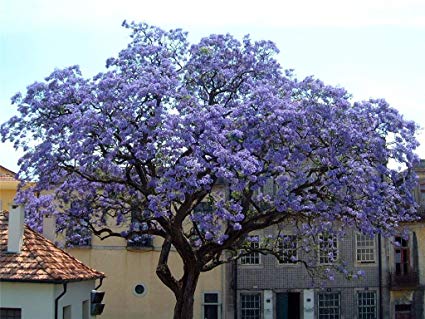
paulownia trees -  any of a genus of Chinese trees of the snapdragon family especially one widely cultivated for its panicles of fragrant violet flowers

sutra - a rule or aphorism in Sanskrit literature, or a set of these on grammar or Hindu law or philosophy

uxorial - relating to a wife

Well, if you made it through this blob, you have a TEENSY taste of what it was like to read Genji! ;) I'll leave you with a few of my favorite lines: 
In the poetry of our land, the poignant beauty of autumn seems to be favored.
A lot of things have changed in a thousand years, but it's oddly comforting to me to know that they loved fall as much as I did. 
There are moments when one wants to pass on to later generations the appearance and condition of people living in the present - both the good and the bad. These are the subjects that people never tire of, no matter how many times you read about them. Shall we make a story unlike any other that has ever been told and pass it on to later generations?
Shall we? Do let's. 

I'm off to The Gorgeous and the Cursed, or was it The Stunning and the Haunted? Or maybe it's just a retelling of Genji. ;) 

Keep each other safe. Keep faith. Good night.