A note on this blog's organization

Since I first started this blog, I've read well over 600 books. I decided to organize them by sections, so to navigate to specific blog entries, review the sections below. To look for a specific book, you can check the list below, then use it to find the right page of the blog. Alternatively, you can try typing the book title or author's name in the search bar at the top left of this blog, but that seems to only pull from 'Conquering the Classics' and '101 and Beyond'.

Saturday, December 22, 2018

We were careless and wild, and I suppose we could be thought of as a sign of the life the war was being fought to preserve.

A Separate Peace by John Knowles

Spoiler Alert: Plot Summary
This is a story about friendship, rivalry, and what war (or the possibility of it) does to a generation of young men. Our narrator is Gene, a student at the Devon School (situated in a similar physical location to the non-fictional Philips Exeter School). He is spending the summer at the school with his friend Phineas and a small group of boys, and while they have some responsibilities, they find that most of the rules that summer are dramatically relaxed, and they have a sort of kingdom unto themselves. If you haven't read this book, I don't want to spoil it for you, because there's a rather central piece of plot that's critical to the whole book. Well. I've decided. Even though I'm in the "spoiler" section, I'm not going to tell you. You'll just have to read it yourself. Let's just say that the story starts with two young men and ends with one. 
Spoiler Over: Continue Here

More than anything, this book made me miss the state of New Hampshire. While I was living there, I loved many things - my work, my students, the epic snowfalls - the thing I fell in love with more than anything else was the actual state itself. New Hampshire, if you haven't been, is a stunning state, and the lines in the book about 'the open New Hampshire sky' and 'the north country' made me miss it dearly. So consider this blob a love letter to you, NH. 

See you on the quad in fifteen!
Gene is consistently doing what Phineas tells him to, and Phineas's way of expecting behaviors reminded me very much of a certain friend of my sister's (and now mine) who has a similar ability. She used to text my sister in college with things like, "Looking forward to throwing frisbee - see you on the quad in fifteen!" And she would expect her throwing partner, regardless of my sister's previous plans or desires. Here's an example of this with Gene:
At that time it would never have occurred to me to say, 'I don't feel like it tonight,' which was the plain truth every night. I was subject to the dictates of my mind, which gave me the maneuverability of a strait jacket. 'We're off, pal,' Finny would call out, and acting against every instinct of my nature, I went without a thought of protest.
Phineas
Phineas is really the star of this book, so I wanted to share some lines that encapsulate him. Here are a few I liked:
  • Although he was rarely conscious of it, Phineas was always being watched, like the weather.
  • Finny had tremendous loyalty to the class, as he did to any group he belonged to, beginning with him and me and radiating outward past the limits of humanity toward spirits and clouds and stars.
  • To Gene - "You never waste your time. That's why I have to do it for you." heh heh heh.
  • Phineas bought things only on impulse and only when he had the money, and since the two states rarely coincided his purchases were few and strange. I love this sentence so much. 
Gene
It's not clear to me if this is on purpose, but Gene is a pretty unlikable dude. He spends some of the book thinking Phineas is plotting against him, then decides that isn't happening, then can't really undo the thing he does while he's laboring under his false delusions. Unfortunately, I think these are two lines that capture him well: 
  • Another boy, Leper(Lepellier), on Gene - "You always were a lord of the manor, weren't you? A swell guy, except when the chips were down. You always were a savage underneath."
  • Gene, on Phineas - "Once again I had the desolating sense of having all along ignored what was finest in him."
The war
The war is really the other star of this book. The novel unfolds in the years 1942-43, and the war is a permanent lurking presence, just around the corner for the young men and in every way expected. I thought it was fascinating (and disturbing) how Gene describes later that this time really framed his entire perception of the world. 
The war was and is reality for me. I still instinctively live and think in its atmosphere.
It is this special America, a very untypical one I guess, an unfamiliar transitional blur in the memories of most people, which is the real America for me.
America has fought in many wars in my lifetime, but none that involved drafting, and none which were so all-consuming as the world wars were. It feels really important to me that we remember what that felt like, if for no other reason than that we fight like hell to keep it from happening again. Here are a few things that felt like "truisms" for Gene.
  • The war will always be fought very far from America and it will never end. This sentence could be true for several of the conflicts and wars we've engaged in, unfortunately.
  • Sixteen is the key and crucial and natural age for a human to be, and people of all other ages are ranged in an orderly manner ahead of and behind you as a harmonious setting for the sixteen-year-olds of this world. 
  • Everyone listens to news broadcasts five or six times every day. Amusingly, my only reference point for this was 'Potterwatch'. I mean, I listen to NPR on the regular, but not quite that often.
  • There are just tiny fragments of pleasure and luxury in the world, and there is something unpatriotic about enjoying them. 
Books this book reminded me of
The Lord of the Flies - when boys are a whole world unto themselves

Doctor Zhivago - in particular, the scene when the boys go dig the railroad out from under the snow

The Catcher in the Rye - there was a really familiar Salinger-esque sense to this novel, which made me like it immediately, but which also made me concerned it was not going to end happily.

All Quiet on the Western Front - the idea of the impact of a war on a generation. In All Quiet, the war is WWI, and his fighting defines his life.
The war has ruined us for everything. We are not youth any longer. We don't want to take the world by storm. We are fleeing. We fly from ourselves. From our life. We were eighteen and had begun to love life and the world; and we had to shoot it to pieces. The first bomb, the first explosion, burst in our hearts. We are cut off from activity, from striving, from progress. We believe in such things no longer, we believe in the war.
Seasons
I loved that Phineas loved winter, as it is one of my favorite seasons. My favorite seasons are, in order, Fall, Winter, Spring, and Summer. What are your favorites, dear readers? I loved this line from Phineas:
The winter loves me, he retorted, and then, disliking the whimsical sound of that, added, 'I mean as much as you can say a season can love. What I mean is, I love winter, and when you really love something, then it loves you back, in whatever way it has to love. 
Words, Wonderful Words
inveigle - persuade (someone) to do something by means of deception or flattery

effulgence - brightness taken to the extreme; one may be dazzled by it, stunned by it, or even overcome by it. Usually used to refer to the sun or some other mega-star, effulgence can also be used more figuratively.

decalogue - the Ten Commandments

Lines I loved
  • Looking back now across fifteen years, I could see with great clarity the fear I had lived in, which must mean that in the interval I had succeeded in a very important undertaking: I must have made my escape from it.
  • This was the tree, and it seemed to me standing there to resemble those men, the giants of your childhood, whom you encounter years later and find that they are not merely smaller in relation to your growth, but that they are absolutely smaller, shrunken by age. In this double demolition the old giants have become pigmies while you were looking the other way. isn't this a fabulous line? I love the part about 'in this double demolition...' 
  • Happiness had disappeared along with rubber, silk, and many other staples, to be replaced by the wartime synthetic, high morale, for the duration. 
  • We reminded them of what peace was like, of lives which were not bound up with destruction.
  • The closer victory came the faster we were shuttled around America in pursuit of a role to play in a drama which suddenly, underpopulated from the first, now had too many actors.
Well, dear blobbists, I wish you the very happiest of holidays and a lovely new year, if I don't blob again before then. Squeeze your dear ones, listen to the brag of your heart, and remember we much cherish peace anywhere and everywhere that we find it and we make it. Keep each other safe. Keep faith. Good night.

Monday, December 17, 2018

She comprehended the perversity of life, that in the struggle lies the joy.

I Know Why the Caged Bird Sings by Maya Angelou

Spoiler Alert: Plot Summary
This is the first of seven autobiographies which chronicle the life of Marguerite Johnson, aka Maya Angelou. We start off with Maya being sent with her brother Bailey to live with her grandmother and uncle in Stamps, Alabama. As time goes on, Maya eventually goes to live with her mother in St. Louis, as well as in San Francisco, and spends time with her father at various points as well. Some pretty rough stuff goes down (think mom's boyfriend getting too friendly with an 8-year-old Maya) but Maya manages to persevere into young adulthood, at which time she becomes a parent herself.
Spoiler Over: Continue Here

Blob friends, 
   I didn't love this book, nor did I dislike it. I really liked various parts of it, and most of all, I really liked Maya Angelou herself after reading it. As a book, I'm not sure I'll walk away remembering every detail for years to come, but it definitely made an impression. Here are some other thoughts...

Hot takes
- Maya Angelou is very funny.
- Maya Angelou had a pretty intense coming of age, and it's fairly miraculous that she not only survived, but thrived and then recounted it so eloquently for us.
[For evidence, see such scenes as "driving dead drunk dad home from Mexico when you don't know how to drive, let alone drive stick shift", or "bounces back after her mother's boyfriend rapes her when she is 8"]
- Maya Angelou is a badass.

Seven volumes of autobiography
Okay, so I didn't know there were seven volumes in her autobiography, or that this was only the first of the seven. Admittedly, she had a pretty cool first 17 years, so I can see there being plenty of fodder for more books, but seven? That feels like a lot. That reminds me of someone else... (Cough) Proust? ;)

Maya and Bailey/Scout and Jem
The relationship between Maya and Bailey reminded me a lot of the relationship between Scout and Jem. Both were the only pair of children in their families, both grew up under one strong parental voice (Atticus, Momma) and both fiercely fought for the other at various critical points of childhood.

Momma and Marilla
Since we're on the topic of other books this book reminded me of, I'll just also let you know that Momma (Maya's grandma) reminded me a lot of Marilla Cuthbert. Some samplings:
  • Momma never answered questions directly put to her on any subject except religion.
  • Knowing Momma, I knew that I never knew Momma. Her African-bush secretiveness and suspiciousness had been compounded by slavery and confirmed by centuries of promises made and promises broken.
Mom's family in St. Louis
Lots of things happen when Maya and Bailey move to St. Louis for a time and live with their mother. This was one of my favorite lines, in reference to her mother's brothers:
I admit I was thrilled by their meanness. They beat up whites and Blacks with the same abandon, and liked each other so much that they never needed to learn the art of making outside friends.
Not condoning violence here, but I liked the idea that they were so insular they never bothered to learn how to meet other people. 

Did de-segregation burst something beautiful within the Black community? 
I'm sure I am not the first person to ask this question. In fact, I'm sure there are whole treatises and papers on the subject. I mention it here because the community that Maya grows up in in Stamps, while certainly suffering in a variety of ways because it is segregated from the white community, has an incredible warmth and vibrancy and community. I'm sure various sub-communities still exist within black culture, but this was the first time I read something that really made me stop and go, "ooh, did we ruin something while we were trying to fix something else?"

Lampfish of Twill
Was one of my favorite books growing up, and I thought of it when I read this line: 
  • The lamplight in the Store gave a soft make-believe feeling to our world which made me want to whisper and walk about on tiptoe.
After
As Maya tries to recover from being raped, she's still only 8 or 9 years old, so in many ways she doesn't really know how to process what she's feeling. I liked what this line captured, and it reminded me of the way that Roxane Gay talks about her life in terms of "before" and "after". 
For nearly a year, I sopped around the house, the Store, the school and the church, like an old biscuit, dirty and inedible.
Mrs. Flowers
Mrs. Flowers is a delightful character, and a real person who serves as a critical role model for Maya when she returns to Stamps after her time in St. Louis. She reminded me of many such a character - the old wealthy woman who shares her books - only here, her library and wealth are all the more remarkable because she is also a black woman in the early 20th century. Here are some lines I liked: 
  • It would be safe to say that she made me proud to be Negro, just by being herself.
  • I was liked, and what a difference it made.
  • I wouldn't miss Mrs. Flowers, for she had given me her secret word which called forth a djinn who was to serve me all my life: books.
We are more alike than we are unalike
This is a line from a famous Maya Angelou poem that Oprah references in her introduction to my copy of this book. It struck me immediately, because I expected to have little in common with Maya, and instead found myself over and over again seeing points of connection and similarity. Here's the list I came up with: 

- Preserving (In Stamps the custom was to can everything that could possibly be preserved.) While this reminded me of my own family, it also reminded me of my most recent read, and Paradise Pickles and Preserves. So interesting how my books never fail to follow each other in seen and unforeseen ways.

- Singer sewing machines - Momma's black Singer sewing machine is featured prominently early on, which reminded me of my own sitting next to me and my mother's and my sister's and so on and so on. 

- Marguerite - Maya's name is Marguerite, and some members of family call her Ritie, while her brother ends up giving her the nickname Maya, which clearly stuck. Marguerite is a family name that shows up all over my maternal lineage, so I immediately felt a kinship with her. 

- Refuge in books/library - Maya has a lot to handle and absorb as she grows up, but, like me, she found refuge in books and in that wondrous invention, the library. 
When spring came to St. Louis, I took out my first library card, and since Bailey and I seemed to be growing apart, I spent most of my Saturdays at the library (no interruptions) breathing in the world of penniless shoeshine boys who, with goodness and perseverance, became rich, rich men, and gave baskets of goodies to the poor on holidays. The little princesses who were mistaken for maids, and the long-lost children mistaken for waifs, became more real to me than our house, our mother, our school, or Mr. Freeman.
- Frequently internalizes rather than verbalizes - I've worked on this over the years, but young Maya reminded me a great deal of myself. 

- Quilts - there's a great line about Momma checking to see if their feet are clean under the quilts. 

- Momma (Grandma) threatening you with her eyes to stay still and quiet at church - my grandma also struggled to keep me in line at church from time to time. ;)

- Laughter so easily turns to hysteria for imaginative children - I loved this line, and it reminded me of the only time I was kicked out of my house (very briefly, to stand on the back porch - no big deal, to be clear) which was for laughing too hard at the dinner table and being unable to control myself. 

- Feeling ungainly/unpretty, esp. as compared to family - Maya is surrounded by beauty in her family, and she feels a little like an ugly duckling, which I identified with. 

- Bologna, potato salad - Both staples at the Stamps summer picnics; both featured at many a family gathering I attended. 

- Going to parties and wanting to read - I distinctly remember going to a family get together, and upon seeing that there were several other children who had been allowed to read the latest Harry Potter in the front room, begging my mother to be allowed to return to the car and read my own copy. (She acquiesced.)

- Playing croquet & pinochle - I'm not sure why so many of Maya's childhood pastimes overlapped with ones I encountered, but again, I found it striking.

- Oakland, San Francisco - I found it particularly interesting to read the sections which took place in Oakland and San Francisco, as I have been there several times for work in the last year. 

Great lines about race
There were so many to choose from, but I've cultivated a selection for you. 
  • If growing up is painful for the Southern Black girl, being aware of her displacement is the rust on the razor that threatens the throat. It is an unnecessary insult.
  • In Stamps the segregation was so complete that most Black children didn't really, absolutely know what whites looked like. I remember never believing that whites were really real.
  • The Depression must have hit the white section of Stamps with cyclonic impact, but it seeped into the Black area slowly, like a thief with misgivings.
  • Maya, on a woman named Mrs. Cullinan calling her the wrong name repeatedly, then renaming her "Mary" to suit her: I decided I wouldn't pee on her if her heart was on fire. lolololololz
  • Every person I knew had a hellish horror of being 'called out of his name'. It was a dangerous practice to call a Negro anything that could be loosely construed as insulting because of the centuries of their having been called n***ers, jigs, dinges, blackbirds, crows, boots and spooks.
  • The Black woman in the South who raises sons, grandsons and nephews had her heartstrings tied to a hanging noose.
  • The night suddenly became enemy territory, and I knew that if my brother was lost in this land he was forever lost. This line and the one above reminded me so vividly of Emmett Till. 
  • On thinking Joe Louis had lost a big fight against Max Schmeling (a white man): My race groaned. It was our people falling. It was another lynching, yet another Black man hanging on a tree. One more woman ambushed and raped. A Black Boy whipped and maimed. It was hounds on the trail of a man running through slimy swamps. It was a white woman slapping her maid for being forgetful.
  • It was awful to be a Negro and have no control over my life.
  • The humiliation of hearing Momma describe herself as if she had no last name to the young white girl was equal to the physical pain. It seemed terribly unfair to have a toothache and a headache and have to bear at the same time the heavy burden of Blackness.
Great lines more generally
  • The world had taken a deep breath and was having doubts about continuing to revolve. 
  • On meeting her dad for the first time: And my seven-year-old world humpty-dumptied, never to be put back together again. I love the use of humpty-dumpty as a verb. :)
  • Weekdays revolved on a sameness wheel. They turned into themselves so steadily and inevitably that each seemed to be the original of yesterday's rough draft.
  • Children's talent to endure stems from their ignorance of alternatives.
  • There was going to be a storm and it was a perfect night for rereading Jane Eyre.
Words new to me
Gladstone - a small portmanteau suitcase built over a rigid frame which could separate into two equal sections, typically made of stiff leather and often belted with lanyards. The bags are named after William Ewart Gladstone (1809–1898), the four-time Prime Minister of the United Kingdom.

catheads - a Southern term for biscuits

didoes - mischievous tricks; pranks; antics. Also, baubles or trifles

mumbledy-peg - a children's game played with a pocketknife, the object being to cause the blade to stick in the ground or a wooden surface by flipping the knife in a number of prescribed ways or from a number of prescribed positions

I'll leave you with two of my favorite lines:
Idiots and lunatics drove cars, why not the brilliant Marguerite Johnson?
Although I had no regrets, I told myself sadly that growing up was not the painless process one would have thought it to be.
If I don't blob before we get there, happiest of holidays and happy winter, friends! I'm off to A Separate Peace. 

Sunday, December 2, 2018

They were strangers who had met in a chance encounter. They had known each other before Life began.

The God of Small Things by Arundhati Roy

Spoiler Alert: Plot Summary
The God of Small Things is a tale of twins. We follow Estha (Esthappen) and Rahel through their present, past, and future, in India and abroad, delving into tragedy and reliving their childhood. They are, in many ways, more a we than a he and a she. They seem to know each other's innermost thoughts and feel each other's pain. The story weaves us back and forth from past to present, and we learn the circumstances that split Estha and Rahel apart, the eventual death of their mother, and how the twins are eventually reunited.

The rest of the family plays an integral role in the plot, from the twins' great-aunt Baby Kochamma, to their grandparents Mammachi and Pappachi, to their uncle Chacko and cousin Sophie Mol. The story is full of death and full of life, packed with flavor and aching with pain and desire. Ultimately, what the twins find and seek is not so much resolution as reincarnation.
Spoiler Over: Continue Here

People whose names begin with the letter D
Dear readers, I wanted to like this book. In fact, I wanted to LOVE this book, since two of my dearest friends (both with names that start with D) are big fans. Alas, I did not love this book. I won't go so far as to say that I hated it, but I will say that it wasn't a very pleasurable reading experience to me. In much the same way that Great Expectations is full of sadness, this book is full of trials and challenges for its characters. But, where GE succeeds for me is that it gives the reader levity and joy within that desolation. This is not to say that only happy books are good ones - that, certainly, is not true. But in this case, I wanted not only a little more joy, but also to genuinely care about what happened to the characters. Perhaps because it took place mostly in retrospectives, I didn't feel that I really got to know the characters, so when things happened to them, I didn't really care very much. In any case, I always encourage readers to make their own decisions about books, and of a trio of readers, this book still has a 67% recommendation rating, thanks to D2. So make up your own mind. 

Capital letters When the Mood seems to Strike
One of the things I really liked about this book was that it reminded me very much of the lyrical quality to several other books I've read by Indian authors (Home and the World, Haroun and the Sea of Stories). Obviously I don't want to lump all authors of a country together, but I do find that there are some similarities and kinships I really enjoy. One of these is a propensity to use capital letters in meaningful ways. Here is an example: 
In those early amorphous years when memory had only just begun, when life was full of Beginnings and no Ends, and Everything was Forever, Esthappen and Rahel thought of themselves together as Me, and separately, individually, as We or Us.
Church domes painted blue like the sky.
During a funeral, Rahel examines the church ceiling, and it is domed and painted like the sky, which reminded me very much of the church I grew up going to. I used to count the stars in the ceiling and imagine the sky beyond that sky, so I liked the idea of us having similar mental explorations continents apart. 

Now tell me, are you jelly, or are you jam? 
Another thing I really liked about this book was that the family owns a factory called 'Paradise Pickles and Preserves'. As I've mentioned in other posts (Please Look After Mom) the process of preserving and pickling makes me think fondly of my mom and my aunts and my great aunts. I loved this line in particular, as my mother and I have discussed the difference between jelly and jam at length: 
They used to make pickles, squashes, jams, curry powders, and canned pineapples. And banana jam (illegally) after the FPO (Food Products Organization) banned it because according to their specifications it was neither jam nor jelly. Too thin for jelly and too thick for jam. An ambiguous, unclassifiable consistency, they said.
Pappachi
Pappachi reminded me in a very negative way of Things Fall Apart and some other classic wife-beaters in literature. That said, here are a few lines about him that I enjoyed:
In the evenings, when he knew visitors were expected, he would sit on the verandah and sew buttons that weren't missing onto his shirts, to create the impression that Mammachi neglected him. haghaghaghahgagh.
His light-brown eyes were polite yet maleficent, as though he was making an effort to be civil to the photographer while plotting to murder his wife. This sentence is so great. 
Feeling vomity
I loved this exchange between Estha and Ammu, his mother, at the movies: 
"Now WHAT?"
"Feeling vomity," Estha said.
"Just feeling or d'you want to?"
"Don't know."
It reminded me of many a conversation I have had with a middle schooler who was feeling vomity, and/or who might have already felt vomity and, say, thrown up in the bathroom sink. 

Books this book reminded me of:
  • Please Look After Mom (house as factory, pickling, preserving)
  • The Home and the World (zamindars, revolution, relationship between castes)
  • Haroun and the Sea of Stories (Capital Letters but also lyrical storytelling)
  • Hotel New Hampshire (incest, siblings intertwined)
  • Things Fall Apart (treatment of wife beating as banal)
  • Ulysses (made me feel vomity, tbqh)
  • The House of Spirits (muteness becoming its own character)
Striking Sentences
  • The old house on the hill wore its steep, gabled roof pulled over its ears like a low hat.
  • A hot river and a pickle factory. 
  • This was the trouble with families. Like invidious doctors, they knew just where it hurt.
New words
Image result for mangosteendhobi - a caste group of India whose traditional occupation was washing clothes

veshya - a Hindu of an upper caste traditionally assigned to commercial and agricultural occupations

estivation - ZOOLOGY: prolonged torpor or dormancy of an animal during a hot or dry period; BOTANY: the arrangement of petals and sepals in a flower bud before it opens

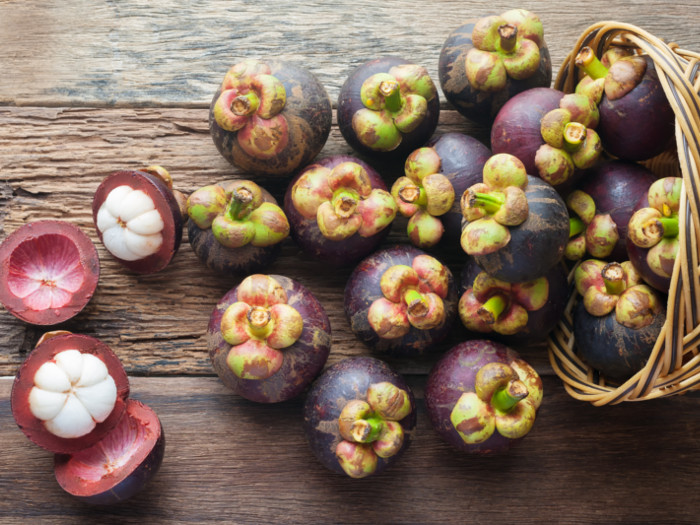
mangosteen - The purple mangosteen, known simply as mangosteen, is a tropical evergreen tree believed to have originated in the Sunda Islands of the Malay archipelago and the Moluccas of Indonesia

mundu - in Kerala and other parts of southern India: a large piece of cloth worn wrapped around the waist and (when worn by men) frequently having the lower back edge pulled up between the legs and tucked into the waistband

Image result for kathakali
lambent - (of light or fire) glowing, gleaming, or flickering with a soft radiance

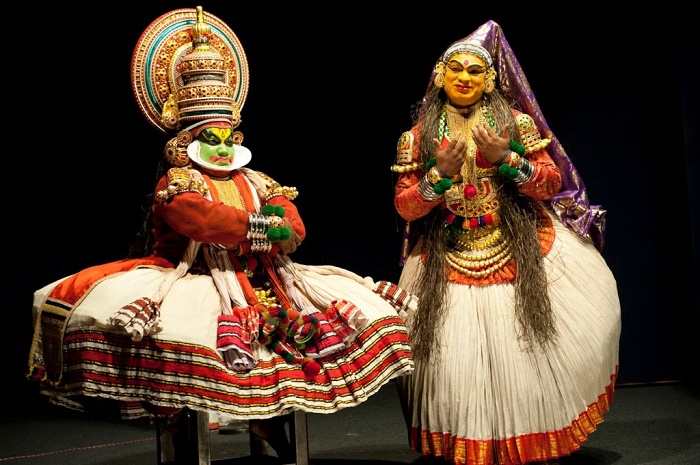
kathakali - Kathakali (Malayalam: കഥകളി) is one of the major forms of classical Indian dance. It is a "story play" genre of art, but one distinguished by the elaborately colorful make-up, costumes and facemasks that the traditionally male actor-dancers wear.

I will leave you with this line, which was a reference to the kathakali, but I think speaks quite clearly to a broader truth: 
The Great Stories are the ones you have heard and want to hear again. The ones you can enter anywhere and inhabit comfortably. They don't deceive you with thrills and trick endings. They don't surprise you with the unforeseen. They are familiar as the house you live in. Or the smell of your lover's skin. You know how they end, yet you listen as though you don't. In the way that although you know that one day you will die, you live as though you won't. In the Great Stories you know who lives, who dies, who finds love, who doesn't. And yet you want to know again.
I'm off in search of more Great Stories, and to explore the beauty of southern California! Onwards to Maya Angelou.